All lives are extraordinary if looked at in close enough detail. A course for new and more experienced writers on the art of memoir/life-writing/the writing of recollection at short or book length. Participants will learn techniques to access and shape their own stories. Come and join us to learn more about using your lived experience in your writing.
 |
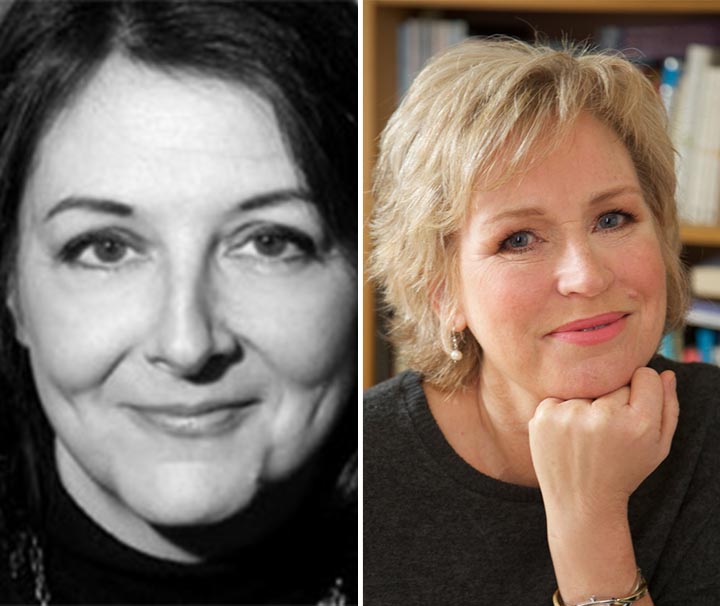
Tutor: Catherine Simpson – Writer
Catherine Simpson’s new memoir ‘One Body: A retrospective’ (2022, Saraband) is an exploration of growing up and growing older in a woman’s body, and how a year of cancer made her reassess the skin she is in. It was described as ‘deep and soulful’ (Sunday Times) and ‘often hilarious’ (Mail on Sunday). Her previous memoir ‘When I Had a Little Sister: The Story of a Farming Family who Never Spoke’ (2019) is set in rural Lancashire and tells of the suicide of Catherine’s sister and of Catherine’s search for answers as to how it happened. When I Had a Little Sister was described as ‘a superb memoir’ (Sunday Times), ‘tormented, riveting and bleakly funny’ (The Observer) ‘gripping and heart wrenching’ (Mail on Sunday). Catherine’s debut novel Truestory (2015) was inspired by her experiences raising her autistic daughter Nina. Catherine received a Scottish Book Trust New Writers Award for the opening chapters of Truestory. She is on twitter @cath_simpson13 |
||||||||
 |
Guest, Wednesday evening: Sally Magnusson – Author/Broadcaster
Sally Magnusson is a writer and broadcaster based in Glasgow, where she presents the BBC news. Her 2014 memoir about her mother, Where Memories Go: Why Dementia Changes Everything, became a Sunday Times bestseller and has been credited with helping to drive change in our treatment of this widespread brain condition. In 2013 she founded the music and dementia charity Playlist for Life. Her 2018 fictional debut, The Sealwoman’s Gift, based on the true story of a 17th century Algerian pirate raid on Iceland, was shortlisted for six literary awards. Her second, The Ninth Child, published in 2020, blends Victorian social history with ancient folklore in the Scottish Trossachs. Her third novel is out in 2023. |
||||||||
| PRICES | Fee includes all day and evening tutored workshop sessions, readings, accommodation and full board (not including alcohol).
Single – En-suite room £945 Single – Shared bathroom £895 Shared Room (2 Beds) £845pp – single supplement £50 |
||||||||
| TO BOOK | £150 deposit payable on booking by bank transfer, PayPal or cheque, to secure place. Balance due six weeks before the start of the course/tutored retreat/untutored retreat. Please see Terms and Conditions. |
||||||||
| INCLUDED |
|
||||||||
| WHAT TO BRING |
|
||||||||
| START TIME |
Please arrive between 3:00pm and 4:30pm on Monday 4th September 2023 |
||||||||
| END TIME |
After breakfast, 10:00am on Saturday 9th September 2023 |
||||||||
| LOCATION | The Garsdale Retreat, Clough View, Garsdale Head, Sedbergh, Cumbria LA10 5PW Nearest railway station: Garsdale, on the Leeds – Carlisle line. For directions, see Find Us section on the Contact page. |
Courses
The Garsdale Retreat provides an inspiring place to develop as a writer. Our courses offer opportunities for new, emerging and experienced writers. The tutors, all professional writers, lead workshops and also give one-to-one tutorials to help the individual student. In the remote and beautiful setting of The Yorkshire Dales, The Garsdale Retreat gives a wonderful opportunity to escape from the daily stresses of life and to draw inspiration from fellow students, tutors and the landscape itself.
All courses start on Monday afternoon, arrival time 3.00 – 5.00pm. On this first day, tea and cake are at 4.30pm followed by an introductory/ice-breaking workshop 5.45 – 6.45pm. Dinner is at 7.00pm. All courses end after breakfast on Saturday (10.00am).
Course Structure
Although there will be slight variations, according to the type of course (see below), students can generally expect the following outline:
8.00 – 9.00am: Breakfast
9.30 – 11.00am: First workshop – Students explore particular aspects of the chosen genre and take part in writing exercises to further their understanding and expertise. All students have opportunities to share their work with the tutor and fellow writers in a safe, supportive and nurturing environment in which individual work is respected and confidence developed.
11.00 – 11.30am: Coffee break
11.30am – 1.00pm: Second workshop
After lunch, participants are free to do whatever they like, such as: relax, go for walks, enjoy The Dales, draw, paint, read or work on individual writing projects.
4.30pm: Tea and cake
5.30 – 6.30pm: Third workshop
7.00pm: Dinner
All students have one individual tutorial of 30 minutes with the tutor in the course of the week which usually takes place at a mutually agreed time, usually in the afternoon.
Each evening, at about 8.30pm, there is an after-dinner event. The precise nature of this varies according to the type of course but participants can typically expect a tutor reading on Tuesday followed by a reading from a guest writer on the Wednesday evening. There is an informal activity on Thursday such as a word/literary game. On Friday, there is a reading of work produced during the week.
Poetry Course Anthology
An integral part of poetry courses is the production of an anthology of writing produced in the week. It is, of course, accepted that the writing is essentially work-in-progress. However, the aim of the anthology is to reflect a flavour of the work accomplished on the course and to provide participants with an attractive record of their time at Garsdale. The Retreat stores copies of anthologies in the library, providing pleasure and inspiration for future students.
Tutored Retreats
These follow the same basic structure as above except there is only one workshop in the morning and participants will have a daily tutorial, four per week.
Untutored Retreats
The only formal structure of the week is determined by meal-times (see above), allowing participants to concentrate totally on their own writing. After dinner, participants in conjunction with the course director sometimes organise evening read-rounds of their work /open mics/music /word games. However, participation in such events is entirely voluntary and people are free to continue with their writing in the evenings if they prefer.