
‘You master form you master time’ – Glyn Maxwell
In this course we’ll experiment with all the things that can be done with time in poems. We’ll begin by thinking of poetry as a way of reaching memories of childhood, school and loved ones – the way that writing poems can be a way of excavating or even fixing all sorts of things from the past. We’ll also think about the excitement of managing different time frames within a poem, ways of generating the whoosh! that can happen when a poem jumps about in time.
The past can also, of course, generate interesting voices for poems, and we’ll look at different ways into the historical monologue, using poetry as a way of accessing all sorts of fascinating characters. Time frames – poems structured around days, years, even minutes – can hold a subject fabulously and give us a concrete way of building poems. And what of the future, that charming land? We’ll consider poems that let us speculate on it or even visit it. Our culture is full of great representations of our relationship to time – Keats’s lovers on the Grecian Urn, forever about to kiss, or Marty McFly, conquering time in his DeLorean.
In this week at Garsdale, we’ll harness the power of the greatest time machine of all: the pen and the paper in front of us, and all the magic we can make. ‘Heard melodies are sweet, but those unheard are sweeter’ – Keats
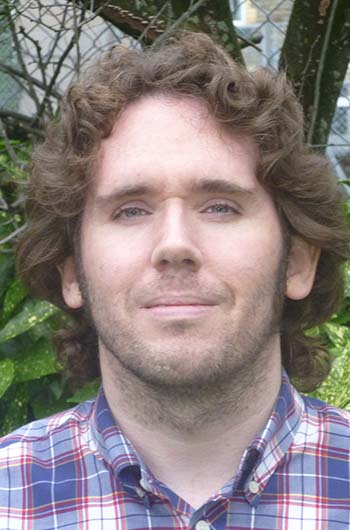 |
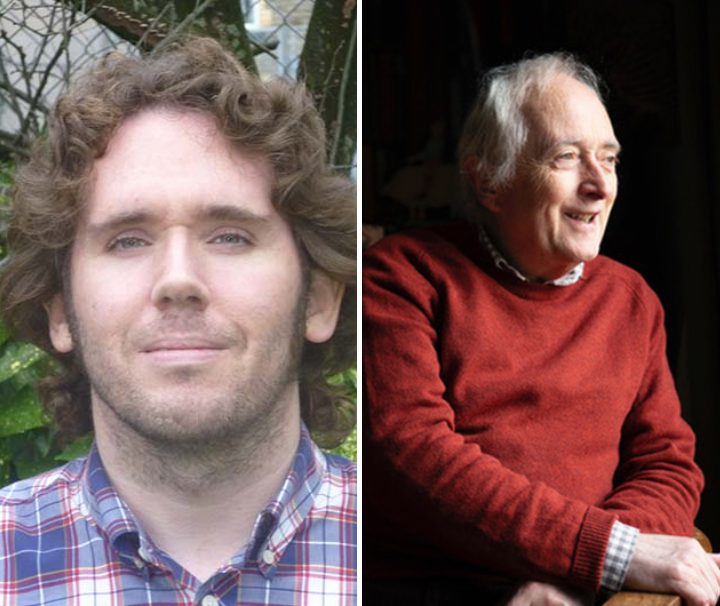
Tutor: Jonathan Edwards – Poet Jonathan Edwards’s first collection of poems, My Family and Other Superheroes (Seren Books, 2014), received the Costa Poetry Award and the Wales Book of the Year People’s Choice Award, and was shortlisted for the Fenton Aldeburgh First Collection Prize. His second collection, Gen (Seren Books, 2018), also received the Wales Book of the Year People’s Choice Award, and his poem about Newport Bridge was shortlisted for the Forward Prize for Best Single Poem 2019. He received the Troubadour Prize in 2022 and the Ledbury Poetry Festival Prize in 2025. His third collection, Talk of the Town, is published by Seren in 2026. Jonathan has been poet-in-residence at Gladstone’s Library and at the Dylan Thomas Boathouse, Laugharne, a judge for the National Poetry Competition, the Wales Book of the Year and the Foyle Young Poets Award, and a Literature Wales mentor of emerging writers. He lives in Crosskeys, South Wales, and is an Advisory Fellow for the Royal Literary Fund. |
|||||
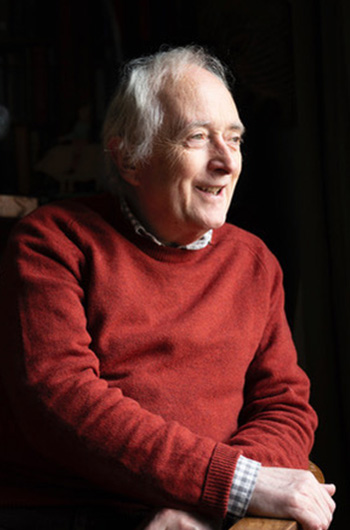 |
Wednesday Evening Guest Reader: Christopher Reid – poet Christopher Reid has written many books of poems, for both adults and children, and for most of the 1990s he was poetry editor at the London publishing house of Faber and Faber. Among his published works are A Scattering, which addressed the loss of his first wife and was named Costa Book of the Year for 2009, and The Song of Lunch (also 2009), a narrative poem which became the screenplay for a BBC2 film starring Alan Rickman and Emma Thompson. The actor Robert Bathurst has presented A Scattering and The Song of Lunch as a theatrical double bill, under the title Love, Loss & Chianti, most recently at the 2022 Edinburgh Fringe Festival. Reid’s subsequent publications include Old Toffer’s Book of Consequential Dogs (2018), a canine companion for T.S. Eliot’s Practical Cats, and the collections The Late Sun (2020), Toys / Tricks / Traps (2023), and Ordinary Morning Sunlight (2026). His edition of The Letters of Seamus Heaney appeared in 2023. Photo credit: Fabrizia Costa |
|||||
| PRICES |
Fee includes all day and evening tutored workshop sessions, individual tutorials, tutor and guest readings, accommodation, inc. sheets and towels and all meals (not including alcohol). Single – En-suite room £1,205 |
|||||
| TO BOOK |
£250 deposit payable on booking by bank transfer, PayPal, credit card or cheque, to secure place. Balance due six weeks before the start of the course. Please see Terms and Conditions. |
|||||
| STRUCTURE OF THE WEEK | See Structure of the Week (tab above) | |||||
| WHAT TO BRING |
|
|||||
| START TIME |
Please arrive between 3:00pm and 4:00pm on Monday 8th March 2027 Tea, cake and housekeeping information 4.30pm Introductory Workshop 5.30 – 6.30pm |
|||||
| END TIME |
After breakfast, 10:00am on Saturday 13th March 2027 |
|||||
| LOCATION | The Garsdale Retreat, Clough View, Garsdale Head, Sedbergh, Cumbria LA10 5PW Nearest railway station: Garsdale, on the Leeds – Carlisle line. For directions, see Find Us section on the Contact page. |
All courses start on Monday afternoon.
3.00 – 4.00pm: Arrival time
4.30pm: Housekeeping/Course information with tea and cake
5.30 – 6.30pm: Introductory workshop
7.00pm: Dinner
All courses end after breakfast on Saturday (10.00am).
Course Structure Tuesday – Friday
8.00 – 9.00am: Breakfast
9.30 – 11.00am: First workshop – Participants explore particular aspects of poetry and take part in writing exercises to further their understanding and expertise. All participants have opportunities to share their work with the tutor and fellow writers in a safe, supportive and nurturing environment in which individual work is respected and confidence developed.
11.00 – 11.30am: Coffee break
11.30am – 1.00pm: Second workshop
1.00pm Lunch.
After lunch, participants are free to do whatever they like, such as: relax, go for walks, read or work on individual writing projects.
4.30pm: Tea and cake
5.30 – 6.30pm: Third workshop
7.00pm: Dinner
All participants on a course have one individual tutorial of 30 minutes with the tutor in the course of the week. These will take place in the afternoons.
Each evening, at 8.30pm – c.9.30pm, there is an after-dinner event:
Tuesday – the tutor will read from their work.
Wednesday – reading from a guest writer.
Thursday – poetry/music performance from Hamish and Rebecca.
Friday – a shared reading of the ‘work-in-progress’ anthology produced during the week.